Kumar Lab

Research

Research

We are currently building experiments that strongly couple atoms in reconfigurable arrays to optical or superconducting microwave resonators. We want to engineer an efficient interface between single atoms and single photons in the pursuit of large scale, useful entanglement. These photons can be used to read out the state of an atom for quantum error correction, mediate long range interactions between atoms to create entangled states, or sent over optical fibers to realize a quantum network.

Cavity-atom arrays of Ytterbium

Optical cavities have long been a cornerstone technology in cavity quantum electrodynamics, enabling exploration of a wide range of phenomena in strong interaction between light and matter. On the other hand, reconfigurable atom arrays have recently emerged as a powerful platform for quantum computation and simulation, but realizing their full potential requires engineering efficient coupling to single photons.

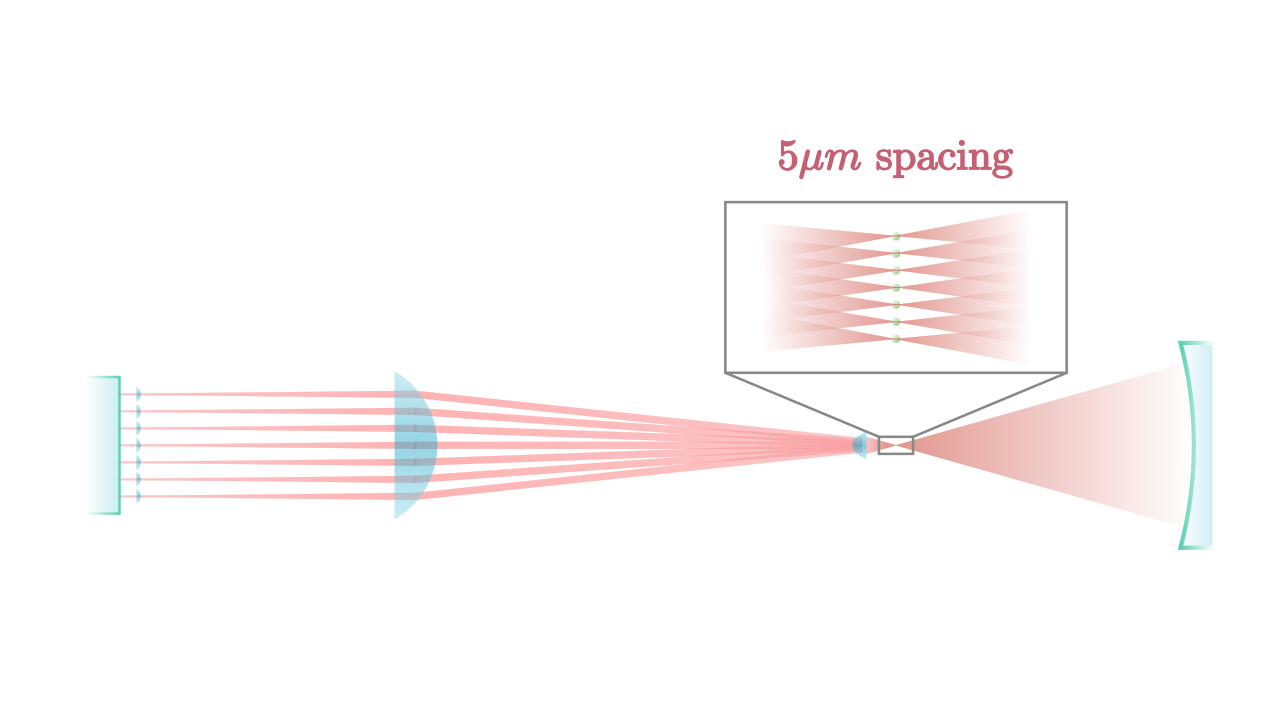
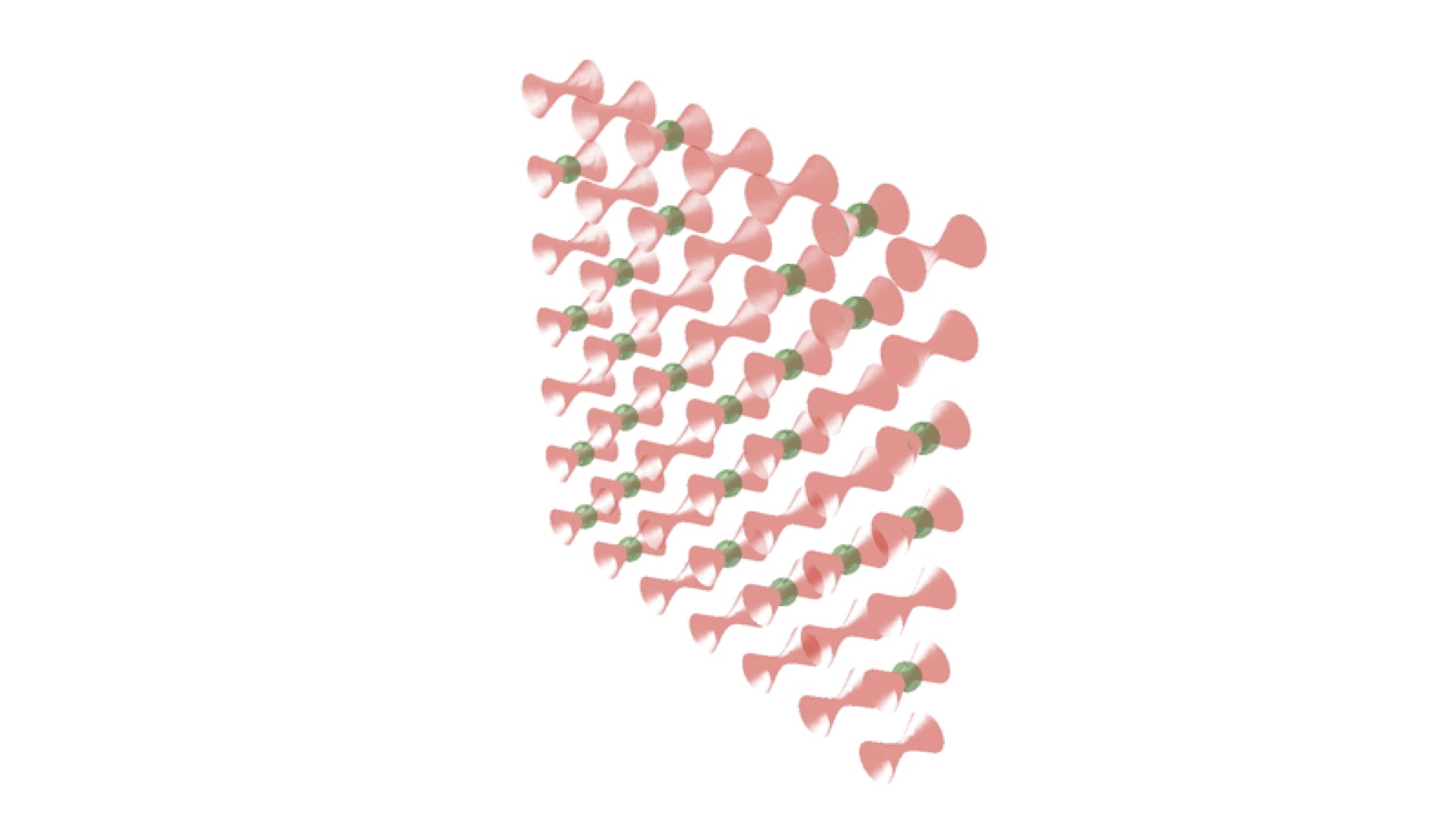
We are taking a novel approach to strongly coupling single atoms in arrays to optical cavities. While most free space cavity QED experiments achieve a high cooperativity by increasing the finesse, our approach is to make wavelength-scale mode size, low to moderate finesse cavities by putting aspheres inside. By incorporating a microlens array, we can realize an array of cavities and overlap it with our array of atoms, giving every atom its own cavity to emit into.

In the short term, we plan to leverage this strong coupling to speed up atomic state detection for quantum error correction in a general purpose quantum computer. We are also interested in exploring the potential for this platform in quantum networking. The telecom transition in Ytterbium will be particularly useful for the latter. The clock transition in Ytterbium will also open new possibilities for metrology.

This platform will also allow for local engineering of dissipation to realize interesting non-Hermitian Hamiltonians. The different cavities in the array can be coupled to each other using intra-cavity elements like acousto-optic modulators, or through auxiliary cavities, allowing realization of models with nearest neighbour and more exotic tunneling geometries.

Optical schematic showing a small-waist cavity array with five-micron spacing.
Visualization of optical modes for a two-dimensional array of atoms and cavities.

Cryogenic atom array coupled to a superconducting resonator

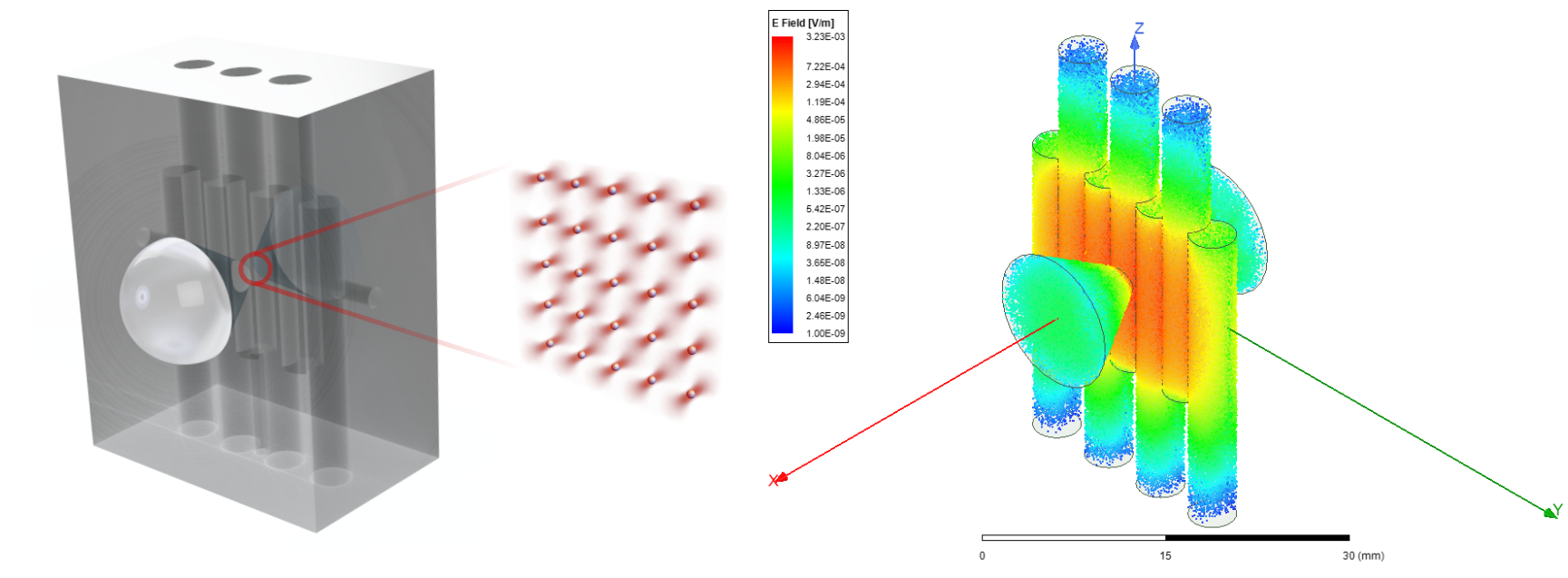
We are building a first-of-its-kind experiment to couple an array of Rubidium atoms to a superconducting microwave cavity. Crucially, the cavity will be used to strongly couple two high lying Rydberg states to single microwave photons. The key parameter in cavity QED is the single particle cooperativity.

This system could potentially have cooperativities two to three orders of magnitude higher than what is possible with even the best optical cavity-neutral atom systems.

This will enable us to generate strong microwave photon mediated any-to-any interactions across the whole array, allowing quantum simulations of many exotic, non-local Hamiltonians and new leaps in creation of Heisenberg-limited spin squeezed states.

The use of microwave photons will also allow us to couple atom arrays to superconducting qubits, opening a plethora of exciting possibilities.

Rendered niobium "flute" superconducting millimeter-wave cavity with an atom array inside, alongside an electric-field simulation.

Selected work prior to Kumar Lab

Selected previous work

A smallwaist cavity

In collaboration with the Simon and Schuster labs at Stanford, we figured out how to make macroscopic cavities with wavelength scale waists. Due to the small waist, these cavities can have low finesse but maintain a high cooperativity. We trapped a Rubidium atom at the waist of such a cavity and demonstrated strong coupling.

Cavity QED in a High NA Resonator. Shadmany, D.*, Kumar, A.*, Soper, A., Palm, L., Yin, C., Ando, H., Li, B., Taneja, L., Jaffe, M., Schuster, D. and Simon, J. Science Advances, 11(9), eads8171 (2024).
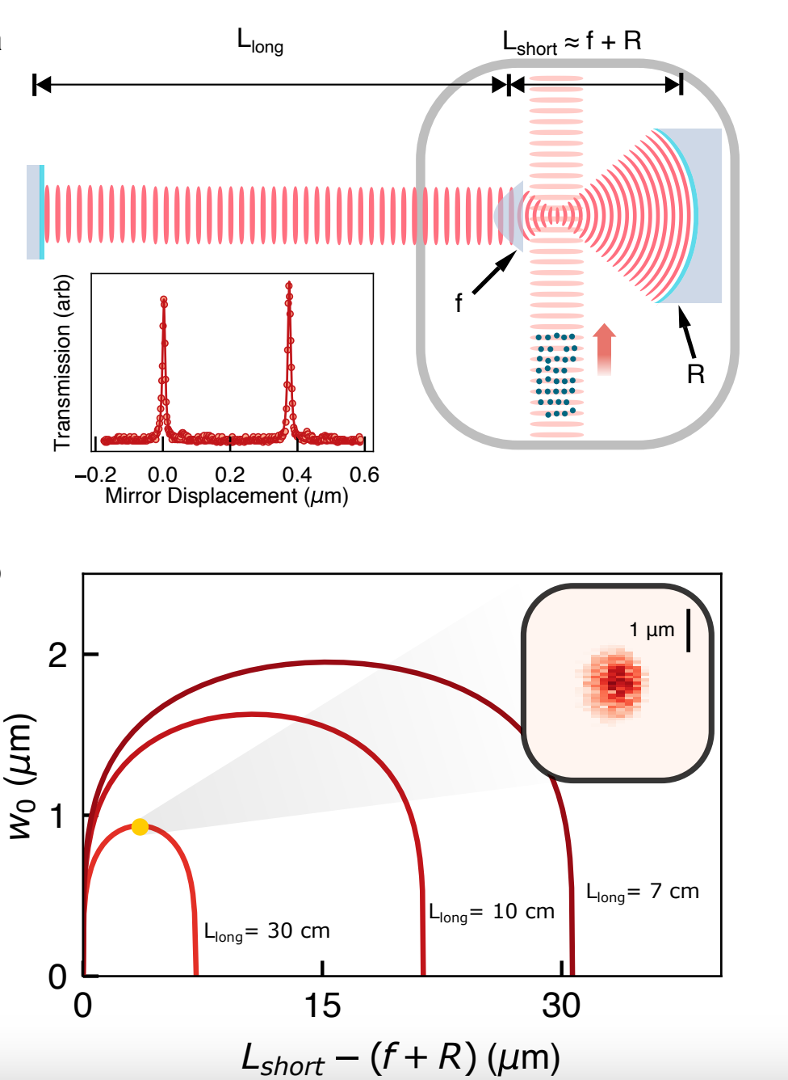
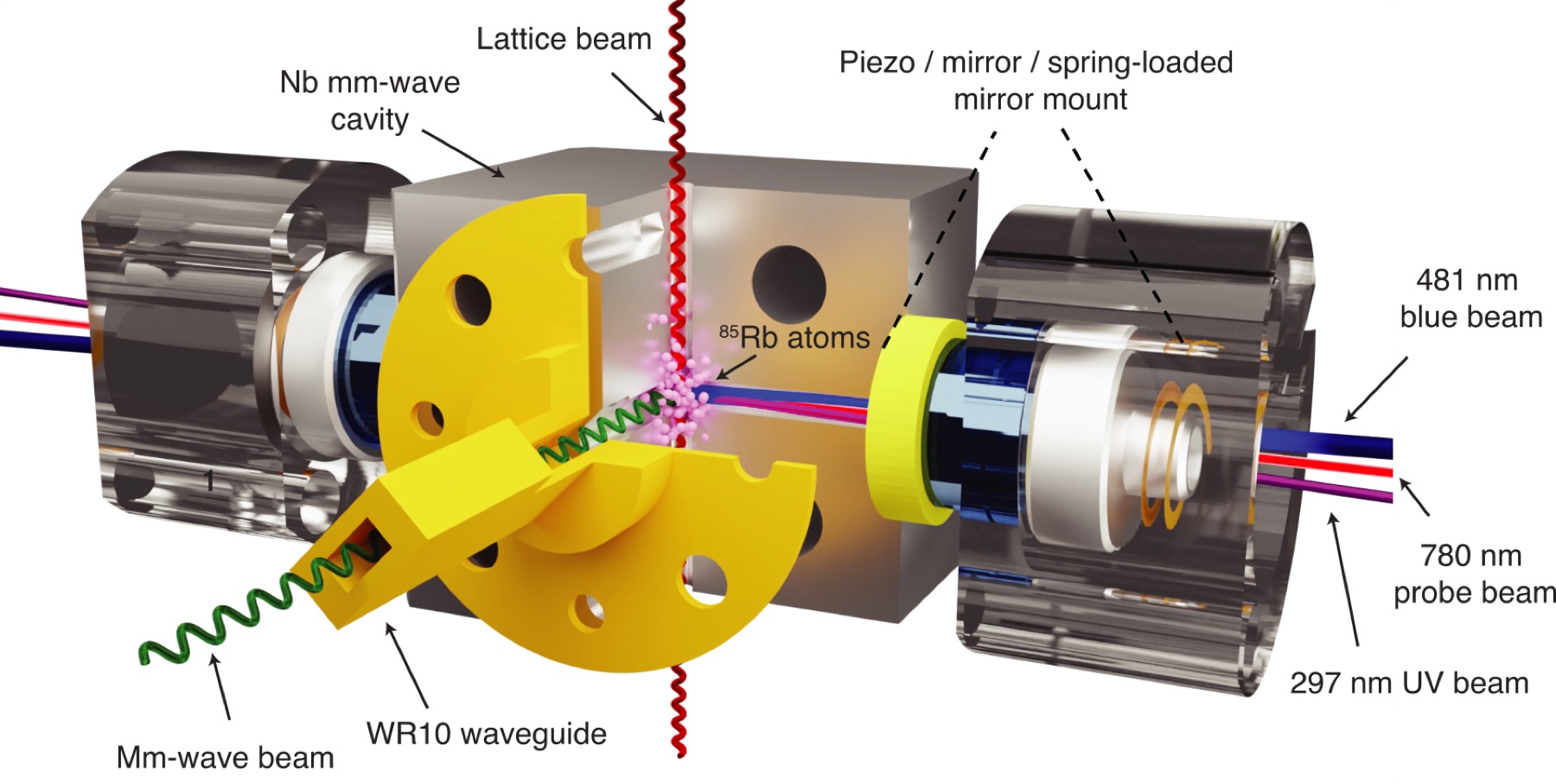
Diagram of a small-waist optical cavity and transmission measurements.

Quantum transduction between millimeter-wave and optical photons using Rydberg atoms

In another experiment, also in collaboration with the Simon and Schuster labs at Stanford, we coupled Rydberg atoms simultaneously to both a superconducting millimeter-wave resonator and an optical resonator. This experiment allowed us to demonstrate state-of-the-art conversion between single optical photons and microwave photons and opened new directions in neutral atom cavity QED.

Quantum-enabled millimetre wave to optical transduction using neutral atoms. Kumar, A.*, Suleymanzade, A.*, Stone, M.*, Taneja, L., Anferov, A., Schuster, D. I., and Simon, J. Nature, 615(7953), 614-619 (2023).

Rendered hybrid millimeter-wave and optical resonator coupling Rydberg atoms to mmW and optical photons.

Neutral atoms in a 3D optical lattice for quantum computation

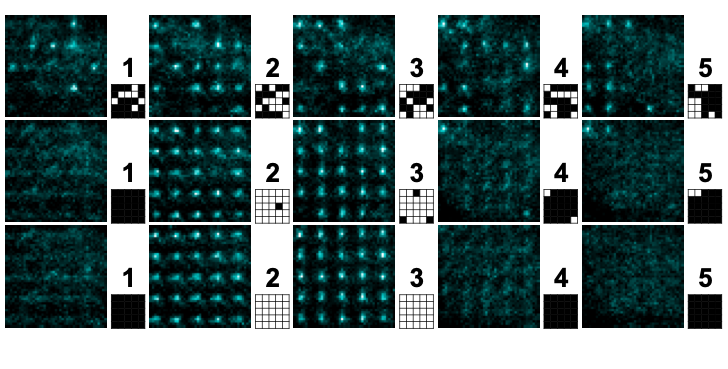
In collaboration with the Weiss Lab at Penn State, we pioneered many advances in neutral atom quantum computing. Our platform was a three-dimensional optical lattice of Cesium atoms. We demonstrated high-fidelity targeted single qubit gates, the first demonstration of atom sorting in a three-dimensional lattice, and high fidelity non-destructive detection of neutral atom qubits.

Sorting ultracold atoms in a three-dimensional optical lattice in a realization of Maxwell's demon. Kumar, A., Wu, T.-Y., Giraldo, F., and Weiss, D. S. Nature, 561(7721), 83 (2018).

Fluorescence images showing atom sorting in a three-dimensional optical lattice.